

This week I would like to welcome Jennifer Wallace and her blog on Mattering.
Mattering is one of our fundamental human needs: the desire to feel valued, seen and significant to others. Drawing on extensive research and lived experience, Jennie argues that a sense of mattering is essential to individual wellbeing, resilience and social connection. Her work resonates strongly with the themes explored throughout our Connecting Conversations guest blog series, where relationships, belonging and meaningful dialogue are recognised as foundations for healthier communities.
At its heart, social prescribing is an activity and approach rooted in these same principles. It seeks to connect people not simply to services or interventions, but to relationships, opportunities and communities where they can experience purpose, participation and connection. The starting point is often a simple yet powerful question: "What matters to you?" This conversation shifts the focus away from deficits, diagnoses and problems, towards the person, their strengths, aspirations and sources of meaning and mattering.
Jennie's concept of mattering provides an important reminder that social prescribing achieves its greatest impact not through process alone, but through relationships. Mattering and connection should remain at the heart of practice, ensuring that every interaction begins with curiosity, compassion and a genuine exploration of what matters most to the person in front of us.
I hope you enjoy reading Jennie's blog.
Siân

The Question Beneath Every Healthcare Conversation
There is a question beneath almost every conversation in healthcare, though it is rarely spoken aloud: Do I matter? At its best, social prescribing is one of the healthcare system's clearest responses to that question.
For the better part of a decade, I have researched the psychology of mattering, defined by researchers as the feeling that we are valued by family, friends, and our communities, and that we add value to the world around us. The more I have studied it, the more convinced I have become that mattering is one of the most overlooked drivers of health.
What the research tells us
You've likely never heard of "mattering," but you've certainly felt it. Mattering occurs in life's big moments, like being toasted on a milestone birthday. But it also occurs in everyday moments, too, like when a colleague calls to check in on you because they know you've been sick. The feeling that hits you when you pick up the phone is mattering.
The concept of mattering was first introduced by sociologist Morris Rosenberg in the 1980s. Since then, researchers, including Gordon Flett at York University and Isaac Prilleltensky at the University of Miami, have built a substantial body of evidence around it. Their research finds that people who feel they matter, who believe they are noticed, cared for, and needed, tend to be healthier, more resilient, and more connected to their communities.
Mattering is the story we tell ourselves about our place in the world: When you walk into a room, are you warmly welcomed? Do people listen to what you have to say? Do you have people in your life to celebrate your wins and support you through setbacks? Are there people who depend on you?
Psychologists describe mattering as a meta-need, an umbrella that encompasses many of our needs, such as belonging, recognition, connection, appreciation, and purpose. But mattering goes deeper than any of these alone, and this distinction matters. For example, you can belong to a group – like a neighborhood or the accounting department – and still feel like you don't matter to the people in that group. Mattering is the feeling that you make a significant contribution to those around you and that you would be missed if you weren't there.
Double-edged
At its core, mattering is the powerful force that fuels everything we do. Mattering cuts both ways — it's protective when we feel it, and it becomes destructive when we don't. When people feel like they matter, research finds they are more resilient, more engaged, and more generous toward others; when they don't, they suffer in ways that are hard to overstate. Mental health struggles often correlate with feeling invisible or unimportant, which are stark indicators that mattering has gone missing from someone's life.
And that absence is at the heart of something troubling. Nearly one in four people, more than a billion individuals, report feeling very or fairly lonely, according to a 2023 survey spanning 140 countries. Beneath the loneliness lies something deeper, the slow, steady erosion of mattering itself.
SAID framework
What makes mattering especially compelling is that it offers both a diagnosis of what ails us and a solution. After decades of research, four elements consistently show up in the lives of people who feel they matter. Together, they form what I call the SAID framework:
• Significant — noticed and valued as individuals
• Appreciated — recognised for who they are and what they contribute
• Invested In — supported by people who care about their growth and future
• Depended On — genuinely needed by others in meaningful ways
Significance is the sense of being for who you are as an individual. Appreciation affirms the doer, not just the deed, recognizing the care, effort, and intention that went behind a contribution. Investment reflects the support others offer to you through guidance and belief in our potential. And dependence is the dignity of being needed in ways that feel manageable and energizing. No matter our age, financial status, or life circumstance, this need to know we matter never goes away.
Social prescribing and the experience of mattering
The SAID framework offers a practical lens for personalised care. In any interaction, we can ask: Does this help someone feel significant, appreciated, invested in, and depended on? If one of those elements is missing, it allows us to see clearly where the struggle lies.
When a Social Prescribing Link Worker asks someone, What matters to you?, it signals that the details of a person's life are important, valued, and relevant to their health. The groups people are connected to through social prescribing, such as walking clubs, community gardens, men's sheds, arts programs, and cancer support circles, allow people to be valued and to add value. When these spaces work well, they create the conditions for all four elements of SAID to emerge. And research increasingly suggests that those experiences influence health outcomes in measurable ways.
The opportunity before us
As social prescribing grows, there is an opportunity to make mattering not simply an unintended benefit of the work, but an explicit goal. In every patient interaction and every service-design conversation, we can use the mattering lens to see which element of mattering is missing for this person.
The Link Workers I have encountered in this field already understand something the research is only now catching up to, that making individuals feel like they matter is the intervention. They are what it looks like, in practice, to tell another human being that their life is significant, that they are appreciated, invested in, and depended on, and that the world is measurably better for their being in it.
That is the medicine we have been missing. And social prescribing, guided by the science of mattering, is how we begin to offer it.
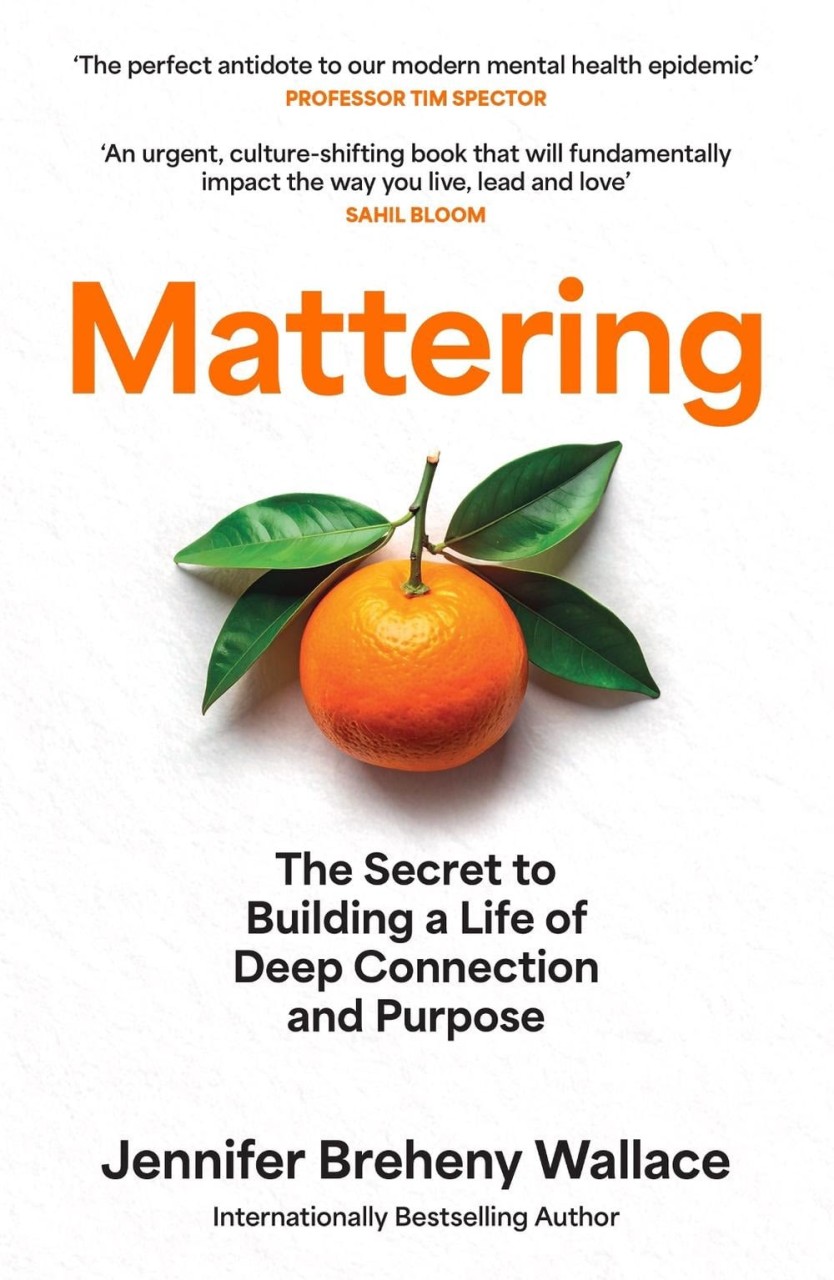
Jennifer B. Wallace is the author of the New York Times bestseller, Mattering: The Secret to a Life of Deep Connection and Purpose. She is also the founder of The Mattering Institute, whose mission is to create cultures of mattering in communities, higher education institutions, and workplaces.
Name: Jennifer Wallace, though friends call me Jennie.
Part of the world I live: New York City, where my husband and I are raising our three children, ages 20, 18, and 16
Occupation: Author, researcher, and speaker. I founded The Mattering Institute, and my work asks one central question: Do the people around us feel like they matter?
What makes you well? Real connection and writing
Why is social prescribing important? Because it recognizes that people don't heal in isolation.
Your favourite nature-based space? Anywhere near the ocean.
Your favourite music? 70s classics (Bob Dylan, Bruce Springsteen, Billy Joel)
Your favourite pastime? Being with my family and reading
If you had one wish for social prescribing? That it becomes understood as mattering infrastructure.
Leadership tips? Listen before you build.
Which one person has most influenced you? My father lived a life of mattering by always making others feel valued and adding value to the world around him.
Advice for others? Imagine everyone you meet wearing an invisible sign that says: Tell me, do I matter? All of us are wearing that sign, and all of us can answer that question for others with kindness and care.

When you subscribe to the blog, we will send you an e-mail when there are new updates on the site so you wouldn't miss them.
Comments