

I am delighted this month to welcome Dr William Bird to our guest blog spot for Connecting Conversations. I have had the pleasure on many occasions now, to both work with William and also listen with delight to his engaging presentations.
Dr William Bird MBE has long been recognised as one of the most influential thinkers in the UK when it comes to the relationship between movement, connection, and long‑term health. A GP by background and a systems leader by instinct, he has spent more than three decades championing the idea that physical activity is not simply a lifestyle choice but a fundamental driver of human wellbeing. His work has consistently pushed the boundaries of how we understand prevention, community resilience, and the environments that help people to thrive.
What sets William apart is his ability to translate complex science into practical, scalable action. Long before "prevention" became a policy priority, he was demonstrating how movement could be woven into everyday life through initiatives like Health Walks and Beat the Street. His approach has always been rooted in a deep understanding of behaviour, belonging, and the social conditions that shape people's ability to live well. For him, physical activity is not an isolated intervention—it is a gateway to connection, confidence, and community.
This is exactly where his work aligns so powerfully with social prescribing. Dr Bird has been a consistent advocate for the idea that movement is most effective when it is relational, not transactional. He understands that people don't become active because they are told to; they become active because they feel supported, understood, and connected to something bigger than themselves. His thinking resonates strongly with link workers, community organisations, and system leaders who see physical activity as a vital part of personalised care.
In this Connecting Conversations guest blog, Dr Bird invites us to explore the deeper story behind movement: how nature, community, and human connection interact to create the conditions for health. He challenges us to think beyond programmes and pathways, and instead consider how we design places and relationships that make movement a natural, joyful part of daily life. His reflections offer both a strategic lens and a human one, reminding us that the most powerful health interventions often begin with a simple invitation to step outside, breathe, and connect.
At a time when the health system is searching for sustainable, community‑centred solutions, Dr Bird's message is both timely and energising. Movement is not just good for us, it is a catalyst for connection, belonging, and collective wellbeing. And when aligned with the principles of social prescribing, it becomes a force for genuine system transformation.
We hope you enjoy the read.
by Dr William Bird
When Health Walks and Green Gyms first started from my surgery in Sonning Common I didn't really know what I was doing. Luckily my patients did. They wanted a healthy life but based on a good life, friends, nature, purpose and something local. In April this year Health Walks will be 30 yrs old. About 500,000 Health Walks (now Wellbeing Walks) have taken place throughout the UK in that time giving many people happiness, friends, connections and purpose often at times in their lives when they felt lonely, vulnerable or just feeling very down. Despite local practices referring patients this type of intervention was still seen as "fluffy" a term common at the time for anything that was delivering health outside the medical model.
During the 1990s inactivity was seen as simply a "deficit" and that all was needed was to provide opportunities and remove barriers. If I had a patient with iron deficiency anaemia I would give them iron tablets and this would prevent anaemia. Simple. At the time the medical model looked at inactivity in the same way. Someone has diabetes due to "exercise deficiency". We devised off the shelf exercise programmes at leisure centres and exercises to do at home so as to prevent diabetes, heart disease and an early admission to a care home. This wasn't fluffy but hard science and looking much more like a health intervention. But despite its clinical approach it was not very successful in maintaining behaviour change. So what were we doing wrong?
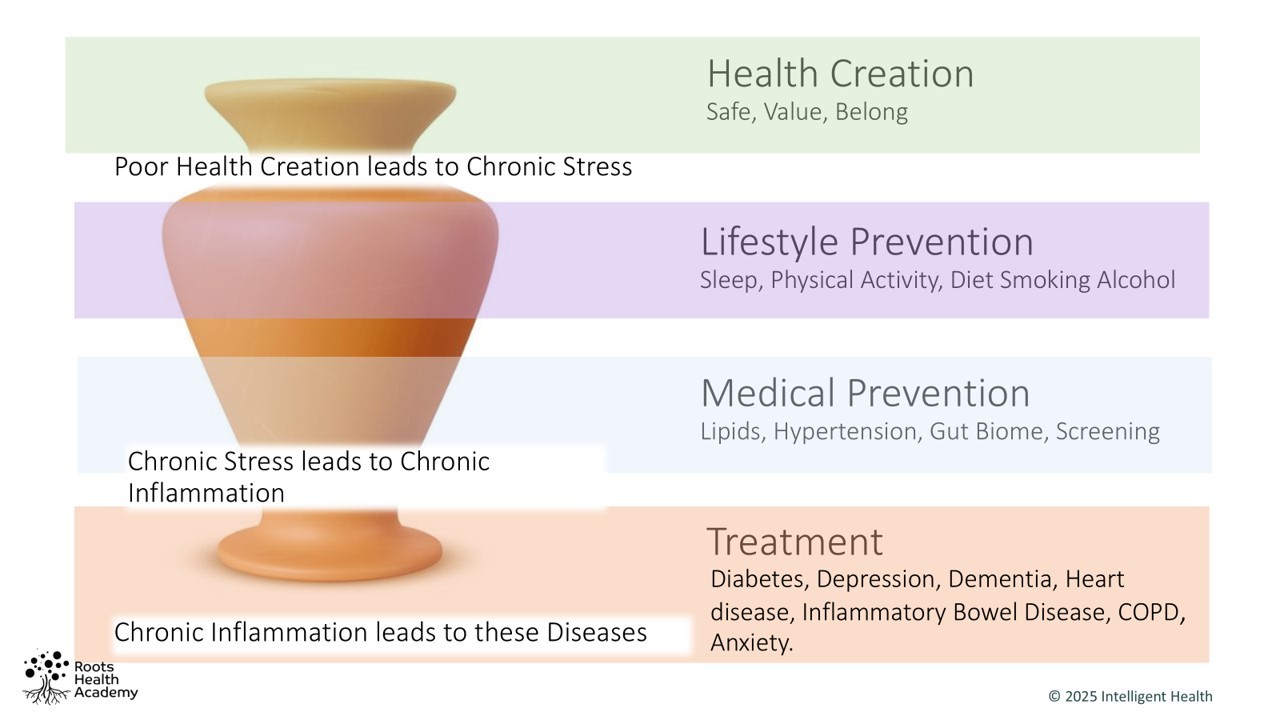
Let's start at the very beginning when humans were hunter gatherers. We had to move to find food, water and to defend territory. However, movement used up precious energy, which is a big risk. As a hunter gatherer, exercise is a rationed commodity. When we feel threatened, we release stress hormones that increase energy to be prepared for fight and flight but in chronic (long term) stress, the cells in the hypothalamus are activated to tune down the motivation to exercise*. This makes sense. A likely cause of death back then, would have been through starvation. In times of stress, food may not be abundant, so every calorie counts. Any unnecessary exercise outside of searching for food or survival is switched off.
So chronic stress is the enemy of getting people to exercise. But stress is not simply about having lots of stressors. New research has shown that when we don't feel safe we default to chronic stress.** To help someone reduce anxiety and stress we must therefore build these pillars of safety.
Taking a look at evolutionary biology might provide us with clues as to these pillars look like. Staying safe has to be our highest priorities in order to stay alive long enough to reproduce. We also need to feel valued so that as a child we get our mother's attention and later in life attract the best mate. Finally, we need to feel we belong. We are a highly social species and by co-operating we increase our chances of survival.
However, if these three factors are not addressed our brain releases stress hormones through our sympathetic nervous system resulting in "survival" emotions (fear, anger, anxiety etc) and "survival" behaviours (inactivity, unhealthy diet, poor sleep etc) to help bring us back to safety. Yes, that's right those negative emotions and behaviours are there for a purpose and have helped us survive over thousands of years. But in today's world they of course cause most health problems we face.
Without realising it at the time, Health Walks were delivering social prescribing, building these safety pillars by giving people control, optimism, purpose and activity but, most importantly, connecting people to each other. Describing social prescribing simply as prevention carries the danger of reducing social prescribing to a transactional intervention whose value is simply to prevent a disease. This may be the currency of the NHS, but it is entirely disease centric. Successful prevention leaves us with nothing, since the disease has been prevented. But there is nothing it its place to keep the disease away. Focussing on prevention means you have to keep running away from the disease but with no destination. So, prevention constantly needs external energy and resource to make it successful since chronic stress if unresolved brings us back to needing more interventions
Social prescribing of course prevents many diseases, but social prescribing goes much further than prevention which means it creates its own energy and momentum needing less external resource. Social Prescribing builds resilience of society by strengthening communities, promoting self-care and helping people to flourish which leads to wider benefits of better mental health, reduced crime and worklessness, increase trust, improve safety and volunteering, and a sense of purpose. This is health creation, and it has a far greater value to the UK than just reducing NHS Spending.
Health creation is about building these factors to support people's lives. Health creation is what most people understand as a good life. No longer are we running away from disease with no destination; instead we are running toward a destination where we will find a fulfilled life with purpose. Unlike prevention, health creation is self-sustaining as it generates its own purpose and resource. The patients at Sonning Common inherently knew this which is why they have flourished at no cost for 30 years.
Social prescribing shifts the body away from the domination of the sympathetic nervous system towards greater control from the parasympathetic nervous system that allows our cells to be repaired, clears toxins and builds our immune system which in itself reduces chronic inflammation that can help prevent 90% of long-term conditions. So this energy for growth and repair under the command of the parasympathetic nervous system creates a healthy body. Under the sympathetic nervous system (fight and flight) all the energy for growth and repair is diverted to survive. So we become ill. So Health Creation does lead to prevention of disease but it's a by product.
We must therefore look at feeling safe, valued and to belong as key drivers of health. As healthcare workers or community leaders we must bring in values such as kindness, empathy, autonomy and good listening skills to help people create their own optimal health.
Social prescribing is one of the only interventions that contain all three components of healthcare.
So 30 years ago the patients at Sonning Common Health Centre knew what they wanted and it wasn't exercise referral or exercises in a gym. They wanted to connect with others in a neighbourhood they wanted to explore and belong to. They felt safe, valued and with a sense of belonging helping to prevent many diseases over time. But the prevention was simply a by-product along the journey towards a more fulfilled life. As my GP trainer always taught me. "Ask the patient what they need as they are the specialist in this domain!
References:
* Yoon, E.S., So, W.Y. and Jang, S., 2023. Association between perceived psychological stress and exercise behaviors: a cross-sectional study using the survey of national physical fitness. Life, 13(10), p.2059.
** Brosschot, J.F., Verkuil, B. and Thayer, J.F., 2018. Generalized unsafety theory of stress: Unsafe environments and conditions, and the default stress response. International journal of environmental research and public health, 15(3), p.464.
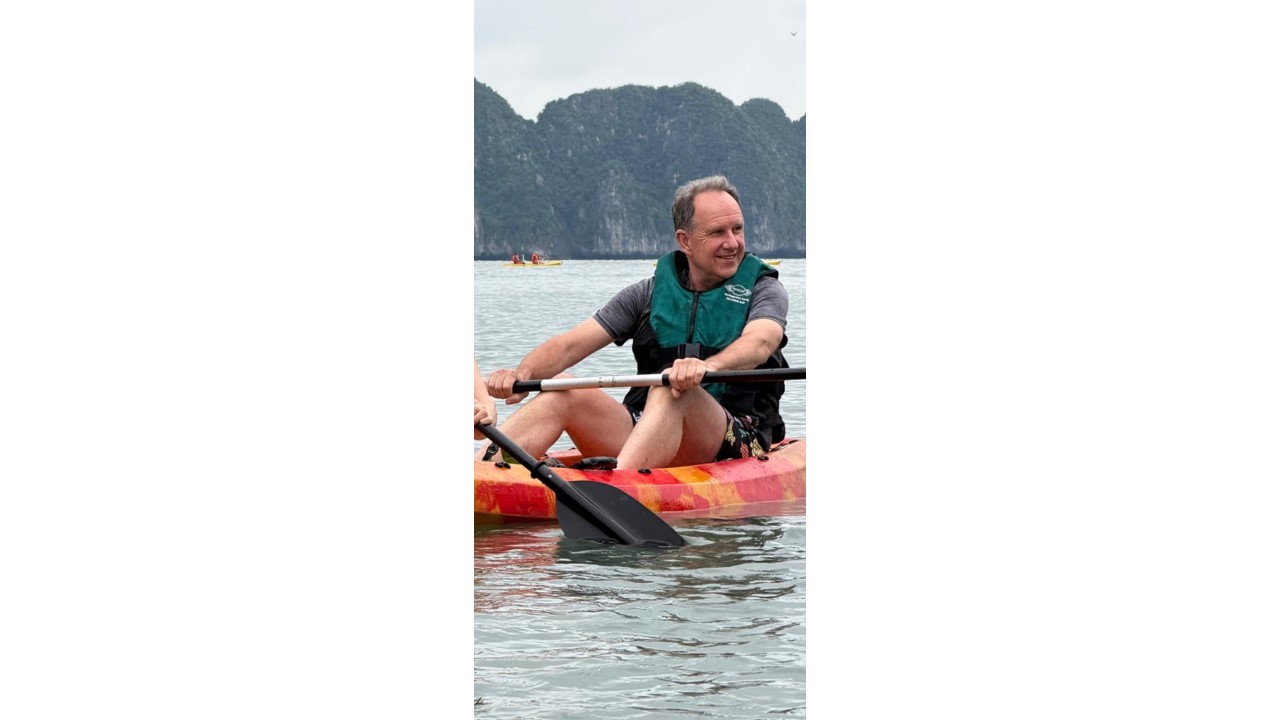
Part of the world I live: South Oxfordshire
Occupation: GP CEO of Intelligent Health
What makes You well? Family, keeping busy, Rowing once a week, walking the dog, inventing nonsense in my shed, and going to the Gym since its literally next door although I often wonder if that makes me well!
Why is social prescribing important? It untaps the huge amount of health that the NHS cannot reach
Your favourite nature based space? A walk in the beech woods during spring.
Your favourite music? So hard. I love all music as long as it creates a story in my head. Blues would be the piano in a busy bar, Electronic & techno; a massive packed club, Classical; a countryside or strong emotions, Pop; memories of times past, folk; the campfire and mountains etc!
Your favourite pastime? Many conventional passtimes are walks in the local woods and rowing in an eight on the thames. But my eccentric side inventing things from a picture in my mind. Finding all the bits and working out how it will work. I have invented some roof tiles made from recycled glass, polystyrene and plasterboard that are half the weight and just as rustic as normal tiles but carbon zero.
If you had one wish for social prescribing what would it be? Social Prescribing would become mainstream within the most deprived areas with intra community referrals dominating.
What are your leadership tips for others who want to set up social prescribing projects? Have a vision of what you want to acheive. Then make it bolder. Have confidence you will achieve it. Thats when you get others to support you. The reason things so often dont happen is beause there is no clear vision for people to get behind with you.
Which one person has most influenced you and why? Muir Gray has been my mentor for 20 years since I worked at the Met Office. His ability to be part of the establishment yet go rogue and never ask for permission just for forgiveness. Its been essential advice.
Any advice for others when working in this space with communities? Listen to people and say nothing. Then do one small thing they ask for quickly and quietly. That is how you earn respect and build trust.
When you subscribe to the blog, we will send you an e-mail when there are new updates on the site so you wouldn't miss them.
Comments