

I am delighted to welcome Dr Hussain Al-Zubaidi to this edition of Connecting Conversations. He is a GP, lifestyle medicine physician, and long-distance triathlete who has built his career around one clear belief: health is about so much more than treating illness—it's about helping people live fuller, more connected lives. Warm, approachable, and deeply passionate about his work, he has become a leading advocate for using lifestyle and community as powerful tools for wellbeing.
As a GP partner at Clarendon Lodge Medical Practice, Hussain has been an advocate social prescribing into everyday healthcare. He understands that sometimes the best "medicine" isn't found in a prescription pad, but in opportunities to move, connect, and engage with others. Whether it's encouraging someone to join a walking group, or get involved in local activities, he helps people find ways to improve their health, through moving more, that feels natural, enjoyable, and sustainable.
His own life is a testament to the benefits of staying active. As a Team GB age-group long-distance triathlete, Hussain knows first-hand how movement can boost not only physical fitness but also mental clarity, confidence, and resilience. Yet, he's quick to point out that you don't need to be an athlete to feel the benefits—just a small step, like a stroll with friends or a gentle bike ride, can make a big difference.
Through his work, Hussain has shown that social prescribing is about more than activities—it's about building a sense of belonging. He often works with local groups, charities, and community leaders to create opportunities where people can meet, share experiences, and support one another. This approach helps tackle loneliness, improves mental health, and empowers people to take an active role in their own wellbeing.
Beyond the clinic, Hussain shares his message widely through media appearances, public talks, and community events. His ability to make health advice feel personal, practical, and encouraging has inspired many to take that first step towards a healthier lifestyle.
I have been working with Hussain on a national programme called Movement Matters and have seen first-hand his passion in supporting people to embed more movement into their lives and how his story telling brings these opportunities to life with optimism and hope for the possibility of positive change.
For Connecting Conversations, his story is a reminder that healthcare can be about connection as much as cure—and that sometimes, the most powerful prescription is an invitation to join in, get moving, and feel part of something bigger.
I hope you are inspired to move more and help others to move more too!
Despite the days getting shorter and the temperature dipping our patients still gathered outside the surgery this week for their dose of social movement. Five years on, this weekly gathering now led by our brilliant health and wellbeing team, including our social prescribers has become one of the most meaningful parts of my week.
I started this initiative alongside a handful of passionate colleagues and patients who volunteered their time because, like me, they believed in the power of movement and community. We didn't have funding, a blueprint or guarantees. What we did have was conviction. And research backs up what we felt intuitively: social connection and regular movement are two of the most powerful interventions for physical and mental health. The Harvard Study of Adult Development, one of the longest-running studies in history, shows that strong social bonds are a key predictor of long-term wellbeing.
Our group is living, breathing proof of this. I can't put into words just what it means to me to see the community come together and support each other. I've witnessed people reaching out to isolated members offering to walk with them at other times, groups planning meals out and the enthusiasm they show in our festive events by bringing their own contributions for all to share. One of our longest standing members brings a beautiful Christmas Tree shaped cake to our yearly Christmas event, a small gesture but symbolising something much bigger: community, belonging and purpose.
Though it was sad to see him go one of our patients was so inspired he set up his own weekly walk/run group in the next town, which is now doing excellently 3 years on. There really is no pill for any of this. Social prescribers are integral in connecting people to activities like ours available in the community but also to hope, capability and a renewed sense of identity.
A Personal Turning Point
My passion for social prescribing didn't begin in a clinic, it began with my own health crisis. In my twenties, I was diagnosed with fatty liver disease. I was burnt out, stressed and living in a cycle of poor nutrition and low mood. My comfort was ultra processed foods and sitting indoors.
The diagnosis shook me. But it was discovering community movement, in my case, parkrun, that changed everything. Week after week, I found myself encouraged by strangers, uplifted by the shared challenge, and slowly transforming my health. That one small step into a local park sparked a cascade of change: better nutrition, more energy, improved mental health. Movement became a way of life and, over time, a cornerstone of my medical practice as I wanted my patients to reap the benefits that I had. We now also support our patients through a guided training program towards completing a parkrun.
Why Social Prescribing Still Matters in Primary Care
Every week I supervise our social prescribing team, and I continue to be humbled by their work. The issues they support such as housing insecurity, financial stress, caregiving pressure and loneliness are complex and often well beyond what can be tackled in a 10 minute appointment. Yet unless these challenges are addressed, patients rarely achieve the health outcomes we hope for, regardless of medication.
This is why social prescribing is not a "nice-to-have", it is essential to the sustainability of primary care. Social prescribers help patients navigate the social determinants of health. They bridge the widening gap between medical need and community support. They create the conditions where lifestyle change can actually happen.
In my experience, when people feel connected, supported and understood, they begin to move more, eat better, sleep better and live better.
Expanding the Movement: What the Last 10 Years Have Taught Me
Seeing the impact of our local group made me determined to go further. Over the years, I've worked to help embed movement and lifestyle support nationally, through roles with the Royal College of GPs, parkrun, Swim England, Think Active and more. I am most proud of the expansion of our lifestyle clinics and movement groups, and nine other primary care networks have now adopted the model we built in Leamington Spa.
These clinics, covering movement, nutrition, community connection and wellbeing, have now supported thousands of patients. The overwhelming feedback is not only improved health, but improved confidence to change. Social connection is one full dedicated session because it deserves that space, it is as vital as any physical activity we prescribe.
The Biggest Challenge and the Solution
The biggest barrier to social prescribing thriving long-term is awareness and engagement. Many people still don't know what social prescribing is. Many GPs have not seen its transformative potential. Many community members feel intimidated or unsure about joining a group. The solution, I believe, is storytelling and education.
For the public, seeing their peers thrive makes participation feel possible. For clinicians, seeing real world outcomes builds confidence and shifts the mindset from "this is extra work" to "this will help my patients, and help my workload." For commissioners, evidence and narrative together carry weight.
This is why I invest so much time teaching, training, speaking, and sharing education and stories openly (including on my social media channel @irondoctorhaz). Social prescribing grows when ordinary people see themselves in the story.
What Will Make the Biggest Difference to Sustainability?
Three things:
1. Embedding movement and social connection as core healthcare interventions
As routine practice, supported by clinicians, social prescribers, and community partners.
2. Investing in the workforce behind it
Social prescribers are highly skilled. They need protected time, adequate supervision, ongoing training and recognition of the complexity they manage.
3. Building long-term partnerships with community organisations
From charities to sports bodies to local volunteer networks, these partnerships expand the menu of options available to patients and create a social ecosystem of health.
From my vantage point; as a GP, lifestyle medicine advocate, educator and someone whose own life was changed by community movement, social prescribing works because it restores something fundamentally human:
Connection.
Purpose.
Belonging.
Capability.
Hope.
And when those things grow, health follows.
As I watch our group gather outside the surgery each week, I'm reminded that change doesn't always require innovation on a national scale. Sometimes, it starts with a handful of people willing to show up, even when the days get shorter and the cold bites and walk side by side.
That's social prescribing. And that's why it matters now more than ever.
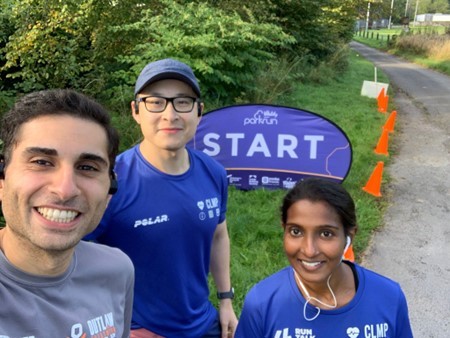
CONTRIBUTOR PROFILE
Name: Hussain Al-Zubaidi
Part of the world I live: Bang in the middle of England (literally), the West Midlands
Occupation: Lifestyle GP, GP educator, Health & Wellbeing Lead at parkrun
What makes you well? Staying active in whatever way I can, even if I have a busy day, I will make sure to get up that bit earlier to move. Even better with friends and anyone that stays with me at the weekend knows to bring their activewear!
Why is social prescribing important? Because it tackles the root causes of ill health, the things medication alone can't reach and fills the gaps traditional primary care simply isn't designed to hold.
Your favourite nature-based space? The lakes and mountains of the Lake District, Keswick in particular. Nothing beats that combination of water, height and quiet.
Your favourite music? Classic rock! Fleetwood Mac and the Eagles to name a few. I also love a good power ballad aka Celine Dion.
Your favourite pastime? Running in new places. From Australia to Morocco to South America, it's my favourite way to explore a new corner of the world.
If you had one wish for social prescribing what would it be? For it to be fully supported and embedded across every primary care network.
Leadership tips for those setting up social prescribing projects: Expect setbacks, embrace them, and keep showing up. Consistency is what turns good ideas into long-term change.
Which one person has most influenced you and why? My wife. She began her own journey with the NHS Couch to 5k and inspired me to start running, something that's since shaped my health, my passions and even my career. We've now both proudly represented Team GB in age-group triathlon.
Any advice for others working in this space with communities? Reach out. Communities are very willing, creative and eager to collaborate than you might imagine. When you take the first step, they often take three with you.
When you subscribe to the blog, we will send you an e-mail when there are new updates on the site so you wouldn't miss them.
Comments