

This week we welcome Debs Teale to write for our Connecting Conversations guest blog series. I have worked with Debs through social prescribing, for many years now and strongly admire her tenacity and resilience in advocating for those navigating health challenges. She is a passionate advocate for the transformative power of creativity in health and wellbeing and shares her story with power and eloquence.
Once living with severe mental illness, Debs' life took a remarkable turn when she was introduced to art through a social prescribing initiative. What began as a small creative outlet became a lifeline, helping her rebuild confidence, rediscover purpose, and reimagine her future.
Today, Debs is a Trustee for the National Centre for Creative Health and a steering group member for the Social Prescribing Network. She is also a vocal supporter of the College of Medicine's Beyond Pills campaign, which calls for a broader, more holistic approach to healthcare. One that recognises the value of non-medical interventions alongside traditional treatments. Her lived experience gives her a unique and authentic voice in the movement, inspiring both professionals and communities to see creativity not as a luxury, but as a vital part of recovery and resilience.
Debs' work spans public speaking, advocacy, and mentoring, where she shares her story to highlight the importance of personalised, compassionate care. She believes that social prescribing, connecting people to activities, groups, and services that support their wellbeing, can be life-changing, especially for those who feel isolated or overlooked by conventional healthcare pathways.
Her journey is a testament to the idea that health is not just about treating symptoms, but about nurturing the whole person. Through her involvement in national networks and grassroots projects, Debs continues to push for a future where creativity is embedded in health policy and practice.
In this Connecting Conversations feature, Debs reflects on her personal journey, the lessons she's learned, and why she believes that creativity, connection, and compassion should be at the heart of every healthcare system.
I hope you enjoy reading her story.
by Debs Teale
My journey with social prescribing happened by chance. I had been diagnosed with bad nerves at the age of eight. I was put on Valium (which was the drug of choice back in the 70s) but thankfully as it knocked me out for days on end, my mum would use it very sparingly so I could still be a child most days.
As time went by and mental health systems developed (there was none back in the 70s), I got more names (labels) attached to me. I also got more medication given, some with the most horrendous side effects (yes worse than Valium as that just made me sleep) to the point where I was not able to function at times and was often missing school as I was bed bound unable to walk/talk/move like a human being should. My schooling and subsequent exams were very poor, but back in the good old days that wasn't deemed to be important.
Move on to 2010, I was now a woman in my 40s, LOTS of mental health labels, LOTS of medication (21 tablets a day) and was not able to work and was barely making it as a mum to my children (who were now my carers). Losing my mum and another major incident in the family made me hit a real crisis point. I begged the psychiatrist for electric shock treatment, he said it wasn't suitable and told meI would always be "medicated, ill and never work again" Needless to say, I ended up doing the only thing I felt would end the painful and incurable mental health issues I had been suffering with since childhood and attempted to take my own life.
Obviously, I was found and woke in hospital to the usual supportive ways of mental health being told by the nurses I was "attention seeking", I had "brought it all on myself" and the bed should be for "someone who really deserved it". Part of being discharged from that ward was that I had to go see psychology. Great I already felt a burden so here I was being made to feel a further burden by going to more services, but I went as I wanted to be discharged and to make sure, I did the job right next time!
It was in this assessment where I saw the leaflet Creative Minds art for wellbeing. I had never done art so I am not sure why, but it stood out and I took it into the appointment with me. The art class was just 5 minutes from my house, and they had a taster session to try the course out before committing. I went along and that is the day my whole life changed. I felt alive, something I had not felt in a very long time.
I signed up to a term at the art class and as each week came and went, I looked forward to the next week. It was a mixture of mixing with other people (not everyone on the course had mental health issues) and talking about life in general. It focussed on my wellness not my illness. It helped me cope in a very different way to what the medication had. Now I don't advocate for no medication, but I do think it should be limited for the shortest time possible, with more sustainable interventions which are practical and less impacting on long term health. The Beyond Pills campaign is doing great work nationally to highlight the challenges, risks and cost of overmedication as well as the benefits of social prescribing as an alternative way to heal.
As the weeks passed and I was feeling better I started to slowly decrease the medication and started to have thoughts and emotions that had been subdued by decades of medication. I was attending the art school on a regular basis and eventually my medications finally stopped altogether (it took a year and under strict supervision). I started to volunteer, initially for an online platform moderating free items in the local community, then I started to volunteer outside of the house. It got to the point where I was volunteering at lots of different organisations I decided to try and look for work. I started doing bank work for the NHS and then got a permanent contract. I was finally off benefits after 14 and a half years!
I have now been off all medications for 13 years, out of services for 10 years and until 3 years ago I worked in the same NHS Trust as the very psychiatrist who said I would never work again (which was interesting on the corridors!) I have sold 208 paintings to date and had a couple of exhibitions at UN and Canary Wharf. I am now self-employed using my lived experience of what life is like in a system that gives up on while you are still trying to hang on in there.
I am a real advocate of social prescribing now as it not only saved my life it has totally transformed it. It has given me a life that I could never have dreamt of. I feel I am giving back to society when previously I felt I was a drain and a burden to it. The NHS are saving money on my care (a SROI on my care stated £33,000 saving per year). It makes financial sense to me to make sure that social prescribing is available to everyone wherever they live. It focusses on the persons wellness, it gives the person autonomy over themselves, it gives them skills for life and connects then back to a (usually) disjointed community.
I now have physical health problems, and I have found it just as beneficial for that as I did for my mental health issues. Social prescribing is a universal language, it holds no religious, age, sexual, ethnicity, language or cultural barriers. It meets the person where they are at, it sees the whole of them not just the part the "expert" is treating at that point in time and with what they might be dealing with. The simple art class I did gave me the skills for life to help me life a very fulfilling, satisfying and very worthwhile existence, something that 40+ years in the mental health system never focused on.
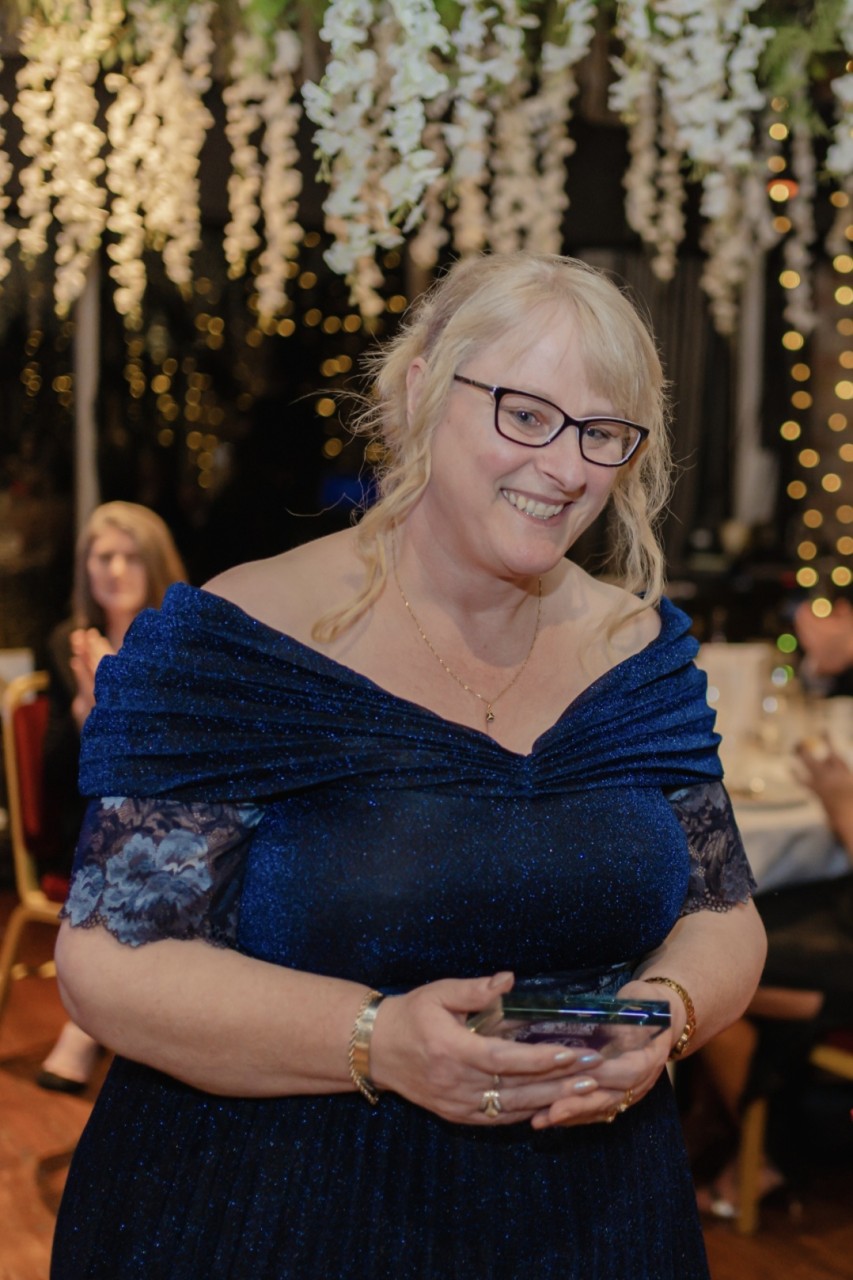
Part of the world I live: North Yorkshire
Occupation: Independent trainer and lived experience advisor
What makes You well? Painting and green spaces
Why is social prescribing important? It focuses on wellness rather than illness
Your favourite nature based space? Watching, listening and identifying birds
Your favourite music? I like such a huge variety of music it's hard to pin down to one area
Your favourite pastime? Watching the world go by
If you had one wish for social prescribing, what would it be? That there wasn't such a postcode lottery for people to access it, that it was consistent and there for all!
What are your leadership tips for others who want to set up social prescribing projects? Follow your heart and watch others flourish and grow.
Which one person has most influenced you and why? Bev Taylor who set up social prescribing in NHSE
Any advice for others when working in this space with communities? Do not allow anyone to say it is a waste of money, this saves money if it is done right and it gives people the skills for life that is lacking throughout other interventions.
When you subscribe to the blog, we will send you an e-mail when there are new updates on the site so you wouldn't miss them.
Comments